
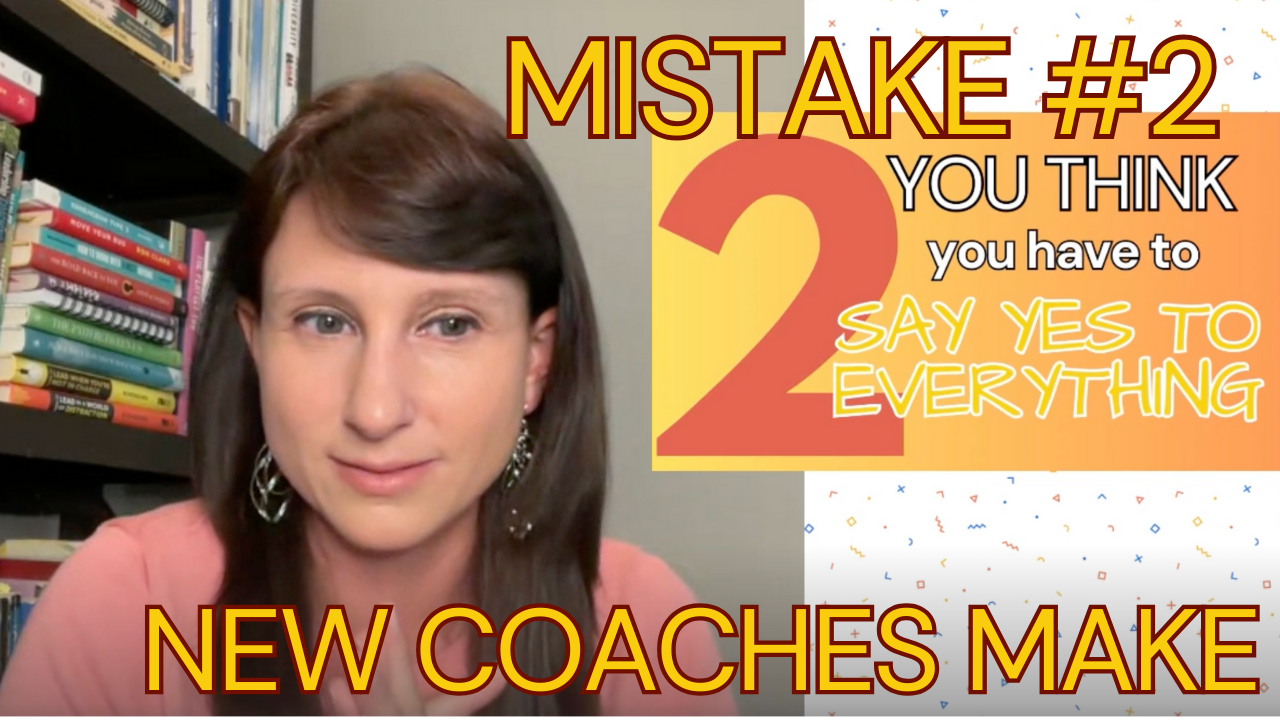
5 Mistakes New Instructional Coaches Make: Don't Say Yes to Everything!
Jul 12, 20265 Mistakes New Instructional Coaches Make: Mistake #2
Learn one of the biggest mistakes new instructional coaches make—and what to do instead. Watch the video, listen to the podcast, or read the blog below.
🎦 Watch on YouTube
🎧 Listen on Spotify
📝 Prefer to Read? Keep scrolling!
Welcome back to the 5 Mistakes New Instructional Coaches Make series! If you're a brand new coach or getting ready to start another year, this series is designed to help you avoid some of the most common mistakes new instructional coaches make.
If you missed Mistake #1, be sure to go back and check it out. Today we're talking about Mistake #2—and it's one that almost every new coach makes.
Mistake #2: Thinking You Have to Say Yes to Everything
One of the biggest mistakes new coaches make is believing they have to say yes to every request that comes their way.
This is completely understandable.
You just got hired into this new role, and you're excited. You want to do well. You want to prove yourself. You want your principal and your team to know they made the right decision by hiring you.
That excitement is genuine.
But instructional coaching isn't a role where you can simply say yes to everything everyone asks you to do.
Why This Happens
Here's what's really going on.
Your administrator hired you because they see you as someone who is capable, experienced, and able to get things done. You're someone who jumps in, solves problems, and follows through. That's one of the reasons you were such a great fit for coaching.
But because you're good at so many things, you may be asked to do things that are a little off the radar when it comes to coaching.
You might be asked to:
- Create newsletters
- Update the school website
- Help with testing
- Organize events
- Take on other leadership responsibilities
None of those things are necessarily bad.
The question is whether they're the best use of your coaching time.
Don't Wait for Someone Else to Define Your Role
As teachers, we're used to someone handing us a schedule and telling us what our day will look like.
So when we become coaches, it's easy to sit back and wait for someone else to tell us what to do.
Then someone asks us to do something and we think, "Okay, I'll do it."
Later we realize...
"Wait...this really isn't coaching."
Instead, take time to understand what coaching really is and what your role should look like.
Then schedule a meeting with your principal to talk about:
- What coaching should be
- How your coaching schedule will look
- How your time will be spent
- What your priorities should be
Having these conversations early allows you to put healthy boundaries around your role so you can say yes to the things that matter most.
A Question to Keep Asking Yourself
One of my favorite questions comes from The Coaching Habit by Michael Bungay Stanier:
If I say yes to this, what am I saying no to?
That question changes everything.
If you say yes to creating the newsletter, updating the website, or coordinating testing...
...are you saying no to working with teachers?
Your time with teachers is limited. They're only available during certain parts of the day, and coaching opportunities are precious.
That's why protecting your time is so important.
Start the Conversation Early
If you're getting ready to start the school year, this is the perfect time to meet with your principal and talk about coaching expectations.
If you've already started the year and you're feeling overwhelmed because you've been saying yes to everything, it's not too late.
You can still have the conversation.
Talk about:
- What coaching should look like
- How your time can be protected
- Which responsibilities best align with your coaching role
- How you and your principal can work in partnership
One especially important conversation is making sure coaching is not viewed as evaluative. If you're asked to do tasks that feel like evaluation—even if that isn't your title—it can send the wrong message to teachers and make coaching relationships much harder to build.
Final Thoughts
It's natural to want to say yes when you're new.
You want to help.
You want to prove yourself.
But one of the best things you can do as a new instructional coach is protect your time so you can focus on the work that matters most—supporting teachers.
Remember:
Every time you say yes to something, you're saying no to something else.
Choose wisely, and don't be afraid to have conversations that bring clarity to your role.
If you'd like help preparing for that conversation, my Getting Started for New Coaches online course includes an entire module on meeting with your principal. Inside you'll find videos, a sample meeting agenda, talking points, and resources to help you confidently define your coaching role from the very beginning.
👉 Grab the 10 Video Online Course Getting Started for New Instructional Coaches for just $19!
👉 Grab your copy of Kickstart Your Coaching Cycles

👉 Are you looking for a mentor and training for your new coaching role?
Learn more about the Make-Change-Happen Academy

Join the #NewtoCoaching Community
Stay up-to-date on the latest blog posts, livestreams, and insights for New Instructional Coaches!
This is where you come to belong, grow, and connect with other coaches.
