
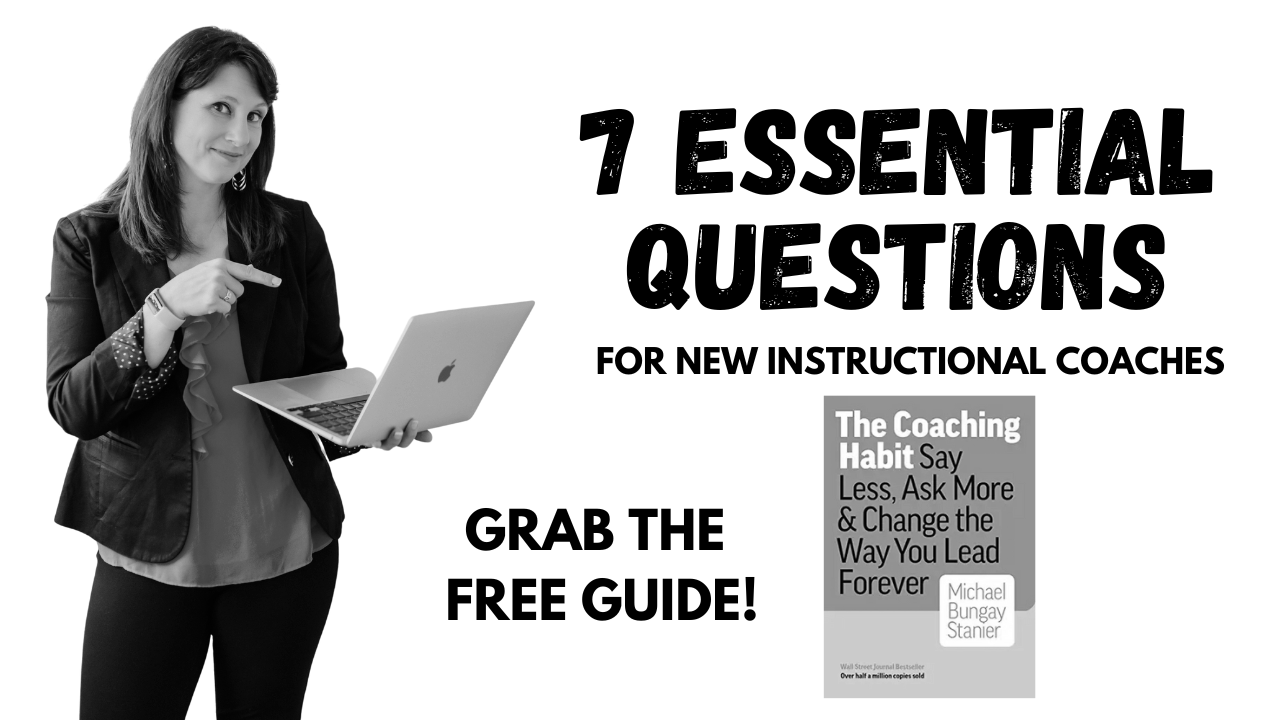
7 Essential Coaching Questions Every New Instructional Coach Needs
Jul 12, 20267 Essential Coaching Questions Every New Instructional Coach Needs
Watch the video, listen to the podcast, or read the blog below.
🎦 Watch on YouTube
🎧 Listen on Spotify
COMING SOON!
📝 Prefer to Read? Keep scrolling!
If you're a new instructional coach, you've probably asked yourself this question more than once:
"What do I actually say to teachers?"
I hear this all the time from new coaches.
You know how to teach. You have experience in the classroom. You have strategies and ideas you want to share.
But coaching is different.
As an instructional coach, your job isn't to walk into every conversation with the right answer. Your job is to help teachers think, reflect, problem-solve, and identify their own next steps.
That's why one of the most valuable tools you can have isn't another strategy or template.
It's a great question.
Here are seven coaching questions I come back to again and again. These questions help build trust, create meaningful conversations, and keep the coaching focused on the teacher instead of the coach.
1. "What's on your mind?"
This is one of my favorite ways to begin a coaching conversation.
Instead of starting with your agenda or jumping right into instruction, simply ask:
"What's on your mind?"
It's a simple question, but it tells the teacher something important:
"I'm here to listen before I lead."
Sometimes they'll talk about a lesson that didn't go well.
Sometimes they'll bring up a student who's struggling.
Sometimes they're feeling overwhelmed, frustrated, or unsure where to begin.
Whatever it is, you've created space for them to share what they're actually carrying into the conversation.
As coaches, we don't have to guess where to start.
We can simply ask.
2. "And what else?"
This may be the most underrated coaching question.
The first answer isn't always the real answer.
Sometimes it's just the easiest thing to say out loud.
When you follow up with:
"And what else?"
you're giving the teacher permission to keep thinking.
For example...
Teacher:
"My students just aren't engaged."
Coach:
"And what else?"
Teacher:
"I think I'm doing too much talking."
Coach:
"And what else?"
Teacher:
"I'm not sure my students even know what they're supposed to be learning."
Now you're getting somewhere.
This question keeps us from jumping in too quickly with advice.
Instead, it helps teachers uncover what's really going on.
3. "What's the real challenge here for you?"
Teachers often start with big problems.
"My students aren't motivated."
"My classroom management isn't working."
"I don't have enough time."
"My test scores are low."
Those are real concerns.
But they're also too big to coach all at once.
This question helps narrow the focus.
Ask:
"What's the real challenge here for you?"
Maybe the teacher realizes the real challenge is keeping students engaged during independent work.
Or maybe it's finding time to fit writing into the day.
Now you've identified something that's actually coachable.
Instead of trying to solve everything, you're helping the teacher identify one place to begin.
4. "What do you want?"
Sometimes teachers are really good at explaining what isn't working.
But they haven't thought about what they actually want instead.
This question helps shift the conversation.
Ask:
"What do you want?"
Or...
"If this were working the way you wanted it to, what would you see students doing?"
Maybe they want students discussing more.
Maybe they want smoother transitions.
Maybe they want students working independently for ten minutes without interruptions.
Naming the goal gives the coaching conversation direction.
Instead of talking about problems, you're talking about possibilities.
5. "How can I help?"
As new coaches, we naturally want to be helpful.
But being helpful doesn't mean taking over.
One of the best questions you can ask is:
"How can I help?"
The teacher may want you to observe a lesson.
They may want to brainstorm.
They may want to co-plan.
They may simply need someone to listen.
Don't assume you know what they need.
Ask.
This keeps coaching collaborative and reminds teachers that they're still in the driver's seat.
6. "If you're saying yes to this, what are you saying no to?"
This is one of my favorite coaching questions because it brings clarity and focus.
Teachers are busy.
Instructional coaches are busy too.
There are always more ideas, more initiatives, more meetings, and more things we could be doing.
But meaningful change requires focus.
If a teacher says yes to improving small-group instruction, they may have to say no to trying three other new strategies that week.
The same is true for coaches.
If we say yes to every request, we're saying no to something else.
This question helps teachers—and coaches—make intentional decisions about where they're investing their time and energy.
7. "What was most useful for you?"
I love ending coaching conversations with this question.
Before wrapping up, simply ask:
"What was most useful for you today?"
It's a great reflection question for the teacher.
But it's also valuable feedback for you.
Sometimes you'll discover the most helpful part of the conversation wasn't a resource you shared or an idea you suggested.
It was simply giving the teacher time to think out loud.
That's coaching.
Helping teachers gain clarity is often more valuable than giving them another strategy.
You Don't Have to Use All Seven Questions
These questions aren't meant to become a script.
Think of them as a toolkit.
In a five-minute hallway conversation, you might only ask:
-
What's on your mind?
-
And what else?
-
How can I help?
In a longer planning conversation, you might ask:
-
What's the real challenge here for you?
-
What do you want?
-
If you're saying yes to this, what are you saying no to?
And at the end of almost any coaching conversation, you can ask:
"What was most useful for you?"
The goal isn't to memorize every question.
The goal is to become the kind of coach who listens well, asks thoughtful questions, and helps teachers move forward with clarity.
Final Thoughts
If you're a new instructional coach, remember this:
You don't have to know everything.
You don't have to have the perfect answer.
You don't have to solve every problem in one conversation.
Start by listening.
Start by building relationships.
Start by asking better questions.
Because sometimes the right question is exactly what opens the door to a stronger relationship, a clearer goal, and a more meaningful coaching conversation.
If you'd like a printable copy of these seven questions to keep with you during coaching conversations, be sure to download my 7 Essential Coaching Questions guide. It's a resource designed to help new instructional coaches build confidence one conversation at a time.
👉 Grab the 10 Video Online Course Getting Started for New Instructional Coaches for just $19!
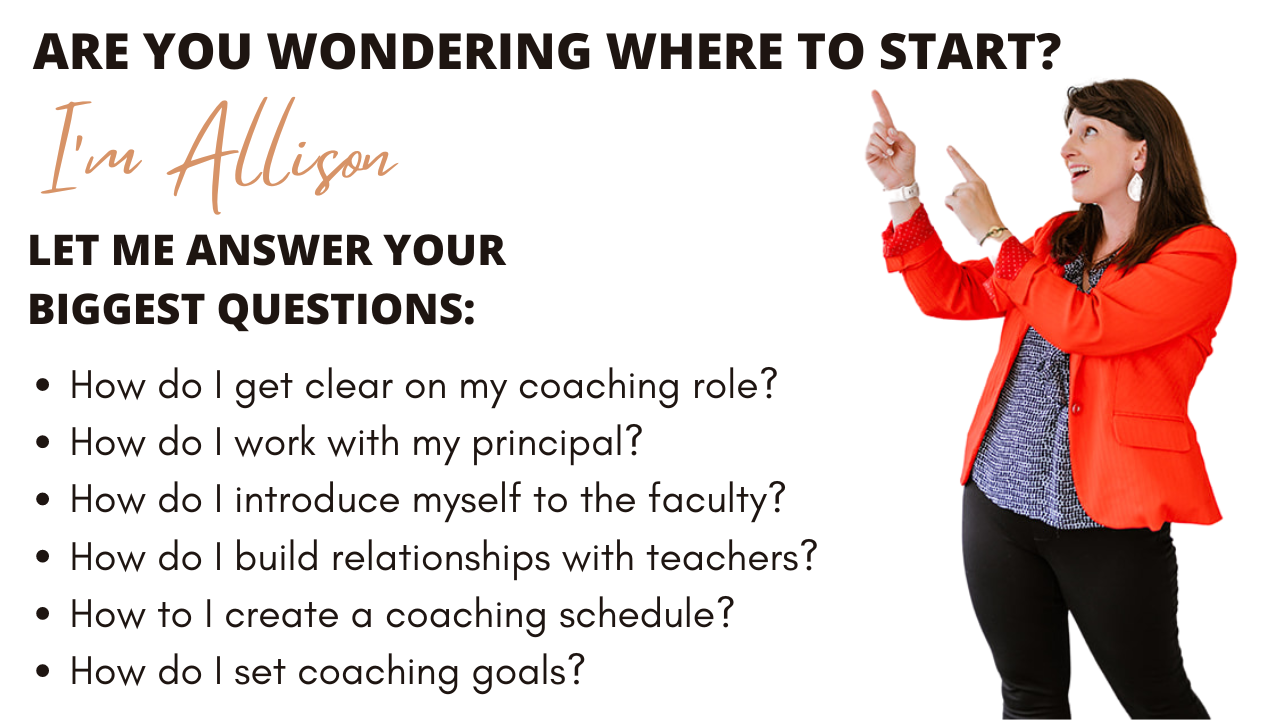
👉 Grab your copy of Kickstart Your Coaching Cycles
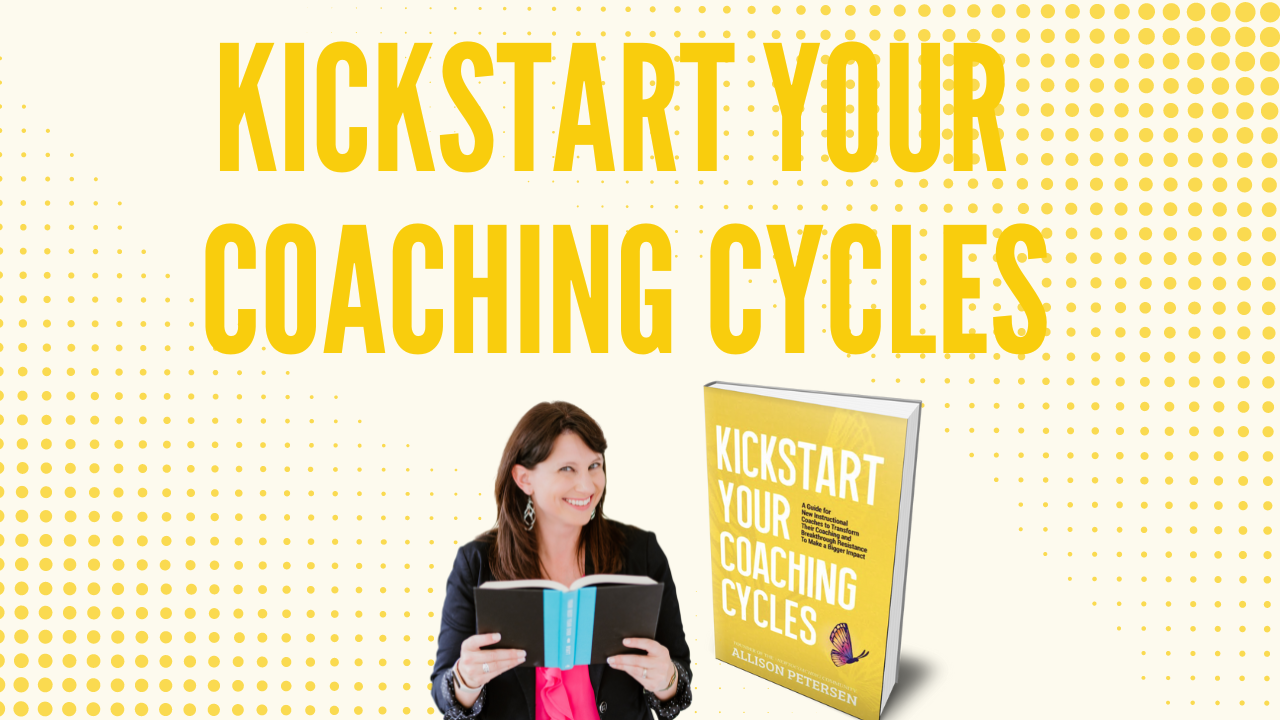
👉 Are you looking for a mentor and training for your new coaching role?
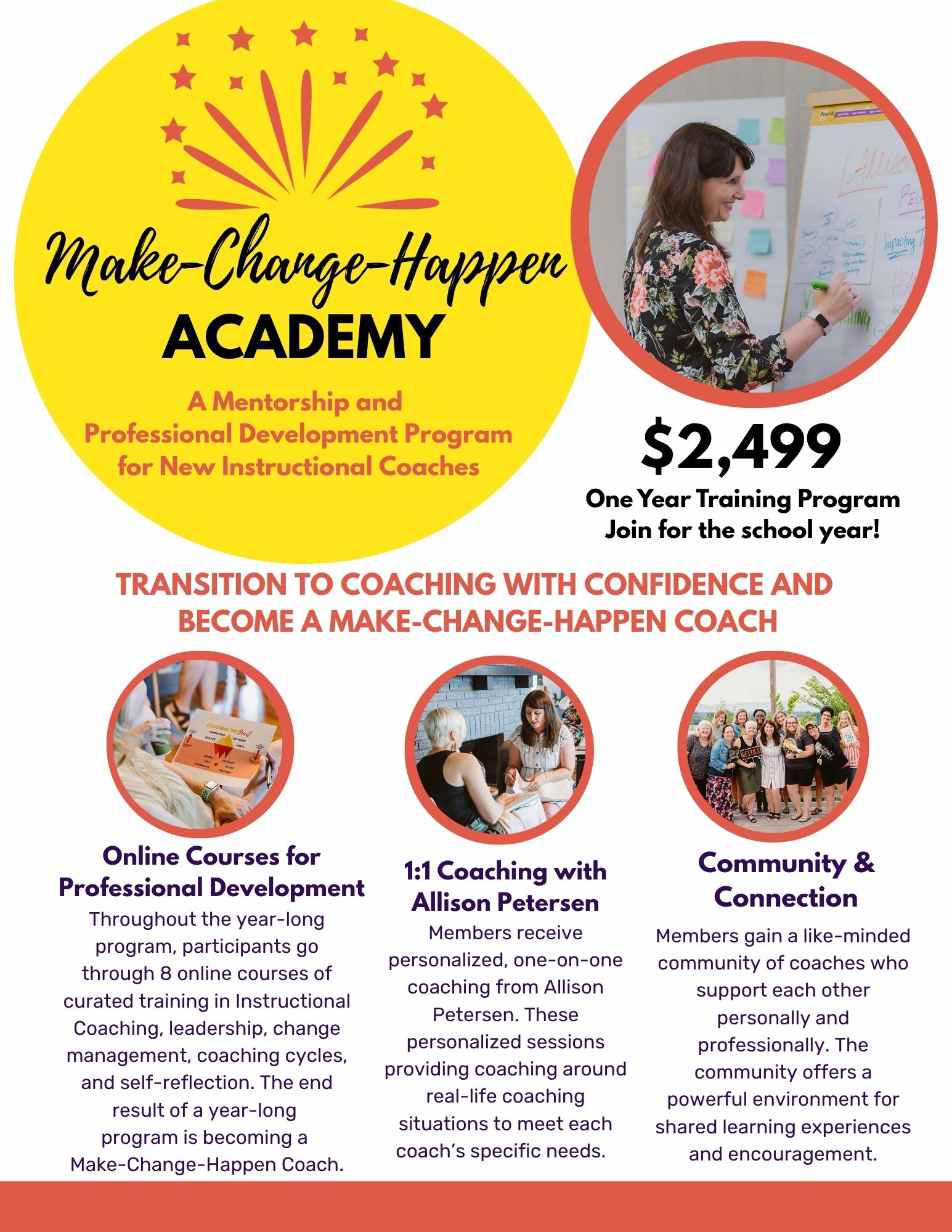
Learn more about the Make-Change-Happen Academy
Join the #NewtoCoaching Community
Stay up-to-date on the latest blog posts, livestreams, and insights for New Instructional Coaches!
This is where you come to belong, grow, and connect with other coaches.
